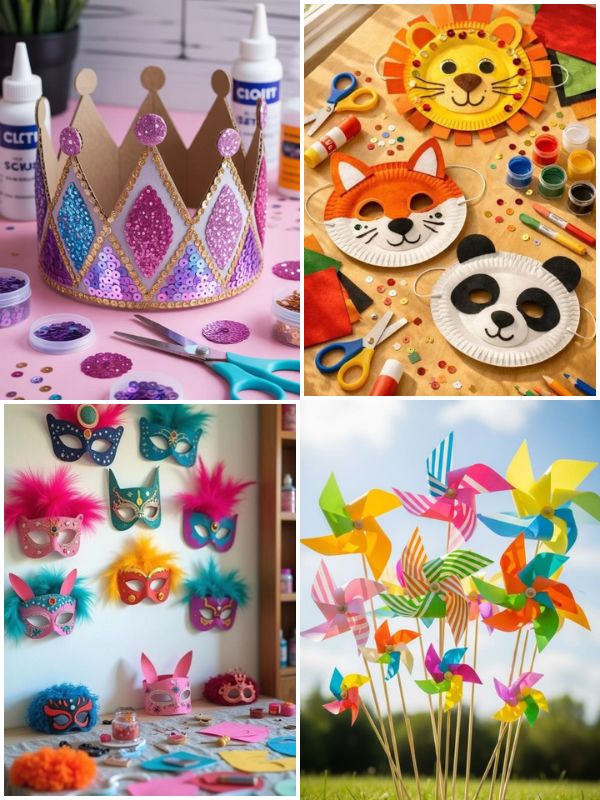
15 birthday party crafts and activities for kids make celebrations fun, exciting, and memorable. If you are planning a birthday party for your little one, you probably want more than just birthday cake, music, and decorations. You also want activities that will keep the children busy, entertained, and excited throughout the celebration.
However, keeping a group of kids entertained is not always easy. Some may love painting and making things, while others would rather dance, play games, or go on exciting adventures. The good news is that you don’t need expensive toys or complicated entertainment to make everyone happy. With a little creativity and some simple supplies, you can organise activities that children of different ages will enjoy.
In this article, you will discover 15 fun birthday party crafts and activities for kids, including creative DIY projects, interactive games, and exciting group challenges. You will also find helpful tips on choosing age-appropriate activities, preparing craft supplies, and organising everything without feeling overwhelmed. If you are hosting a small birthday party at home or a bigger celebration, these ideas will help you create happy moments the children will remember long after the party is over.
15 Fun Birthday Party Crafts and Activities for Kids
Birthday party crafts are a wonderful way to keep kids entertained while giving them an opportunity to explore their creativity. Instead of spending the entire celebration playing games, you can set up a craft station where children make beautiful, colourful items they can take home as souvenirs.
The good thing about these activities is that you don’t need expensive materials or professional crafting skills to organise them. Most of them use simple supplies such as colored paper, glue, markers, beads, ribbons, and cardboard.
If you are planning a princess birthday party, superhero celebration, animal-themed party, or a simple birthday gathering at home, these 15 craft ideas will help you create an enjoyable experience for your little guests.
1. DIY Birthday Party Crowns
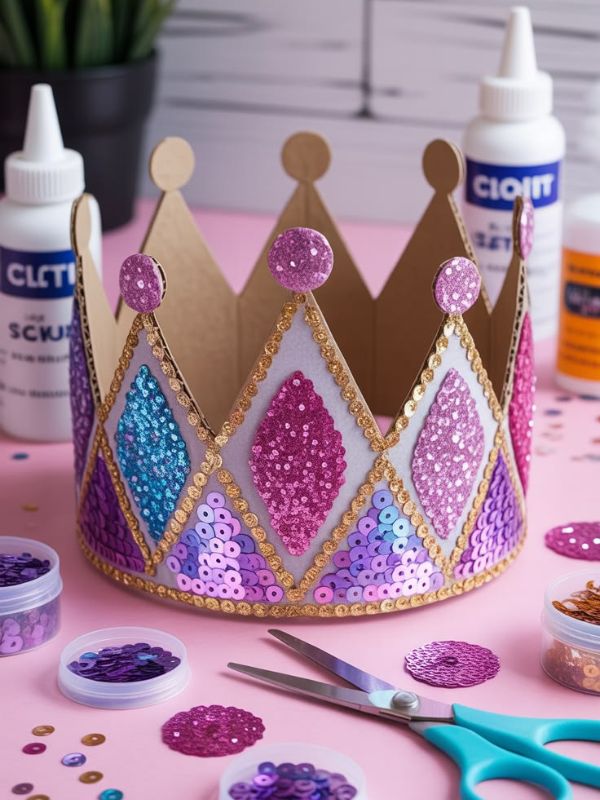
Making birthday crowns is a fun activity that allows kids to feel like little princes and princesses during the celebration. Each child can design a crown using their favorite colors, stickers, glitter, and other decorations.
Materials needed
-
Colored construction paper or lightweight cardstock
-
Child-safe scissors
-
Glue sticks
-
Stickers and glitter
-
Crayons or washable markers
-
Ribbons
-
Stapler or tape
-
Ruler
How to make DIY birthday crowns
-
Cut a long strip of cardstock approximately 2 inches wide. Make sure it is long enough to fit around a child’s head.
-
Draw triangles or pointed shapes along the top edge of the strip to create a crown design.
-
Allow the children to cut along the drawn shapes with child-safe scissors.
-
Give each child stickers, crayons, glitter, and other decorations to personalize their crown.
-
Help them write their names or add a special birthday message to the front.
-
Measure the crown around each child’s head and secure the ends with tape or a stapler.
-
Allow the glue to dry before the children wear their crowns.
Helpful tips: Prepare the paper strips and crown shapes before the party, especially if you have younger children. This will reduce the amount of cutting they need to do and give them more time to decorate.
2. Decorate Your Own Party Masks
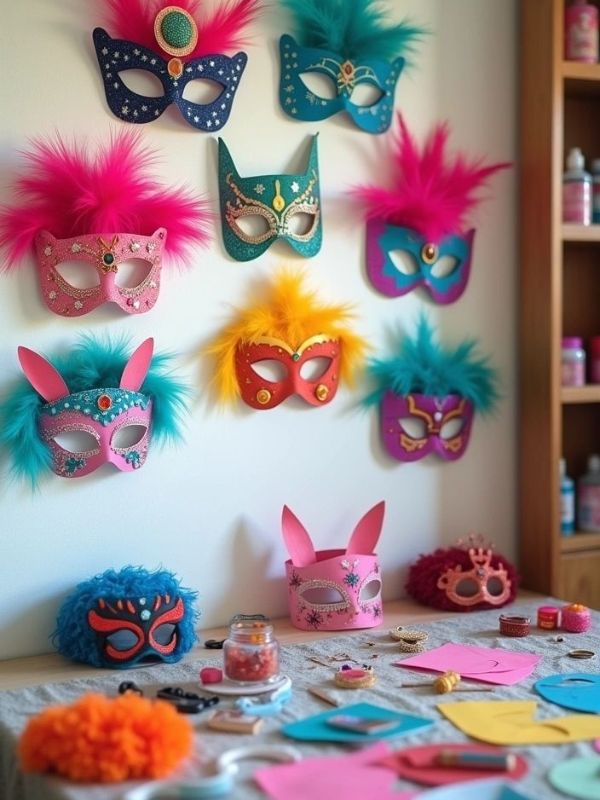
A decorate-your-own-mask station is an exciting craft activity for kids who enjoy pretend play. They can create animal masks, superhero masks, princess masks, or funny character faces.
This activity works particularly well for costume-themed birthday parties because kids can wear their creations during the celebration.
Materials needed
-
Pre-cut cardstock masks or plain paper mask templates
-
Crayons and washable markers
-
Glue sticks
-
Feathers
-
Stickers
-
Colored paper
-
Elastic string
-
Child-safe scissors
-
Decorative foam shapes
How to create party masks
-
Prepare different mask templates before the party. You can create simple animal faces, superhero masks, or traditional eye masks.
-
Cut out the mask shapes and eye openings ahead of time.
-
Give each child a plain mask and allow them to choose their preferred design.
-
Provide crayons and markers so they can color their masks.
-
Let them attach feathers, foam shapes, stickers, or small pieces of colored paper.
-
Once the decorations are complete, help attach an elastic string or paper handle.
-
Allow the masks to dry before the children wear them for pictures or pretend-play activities.
Helpful tips: Prepare several different mask designs so kids can choose what they like. For younger children, complete the cutting and hole-making before the party. Avoid small decorations that children could swallow.
3. DIY Friendship Bracelets
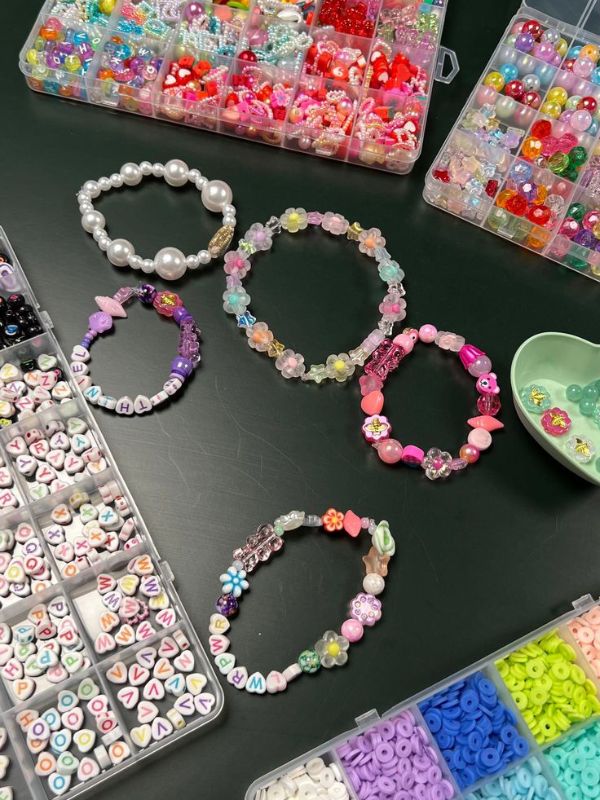
Friendship bracelets are simple handmade accessories that kids can create and exchange with their friends. This activity encourages creativity and gives every child something special to take home.
You organise a bracelet-making station with colourful beads, elastic strings, and letter beads so children can create personalised bracelets with their names or favourite colours.
Materials needColourful
-
ful plastic beads
-
Elastic bracelet strings
-
Letter beads
-
Scissors
-
Small containers for sorting beads
-
Tape
How to make friendship bracelets
-
Cut elastic strings into pieces long enough to fit around a child’s wrist, leaving extra length for tying.
-
Arrange different colored beads in separate containers so children can easily choose their favorites.
-
Give each child an elastic string and show them how to thread beads onto it.
-
Encourage them to create patterns by alternating colors or combining different bead shapes.
-
They can include letter beads to spell their names or a short word such as LOVE or FRIEND.
-
When they finish decorating, help them bring the two ends of the elastic string together.
-
Tie several secure knots and trim the extra string.
-
Check that the bracelet fits comfortably before giving it to the child.
Helpful tips: Use large beads and thicker elastic strings for younger children. Prepare the beads in small trays to prevent them from scattering across the table. This activity requires close adult supervision, especially when small beads are involved.
4. Paper Plate Animal Crafts
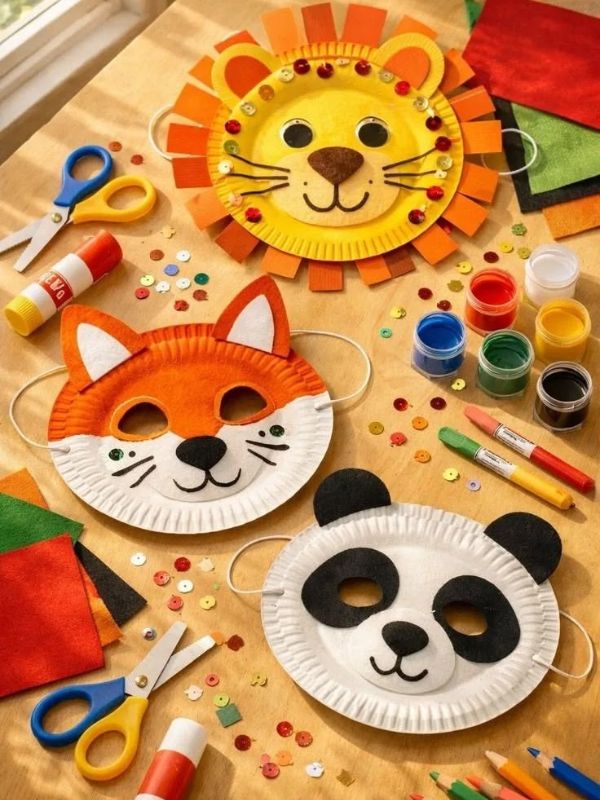
Paper plate animal crafts are an affordable way to introduce kids to creative art. With a few basic materials, they can transform ordinary paper plates into lions, rabbits, butterflies, cats, fish, and other favorite animals.
This activity is particularly suitable for jungle, safari, farm, and animal-themed birthday parties.
Materials needed
-
Plain paper plates
-
Colored construction paper
-
Washable paint or crayons
-
Glue sticks
-
Child-safe scissors
-
Googly eyes or paper eye cutouts
-
Paintbrushes
-
Markers
-
Cotton balls
How to make paper plate animals
-
Give each child a clean paper plate to use as the animal’s face or body.
-
Allow them to choose the animal they want to create.
-
Help them paint or color the paper plate using suitable colors. For example, use yellow or orange for a lion and white for a rabbit.
-
Cut out ears, noses, tails, whiskers, or other body parts from colored construction paper.
-
Allow the children to attach these pieces to the plate using glue.
-
Add eyes and draw other facial details with markers.
-
For a lion, attach strips of orange and yellow paper around the edge of the plate to create a mane.
-
Allow the finished artwork to dry before displaying or taking it home.
Helpful tips: Prepare animal templates for kids who may find drawing difficult. You can also display pictures of different animals to inspire their designs.
5. DIY Birthday Party Wand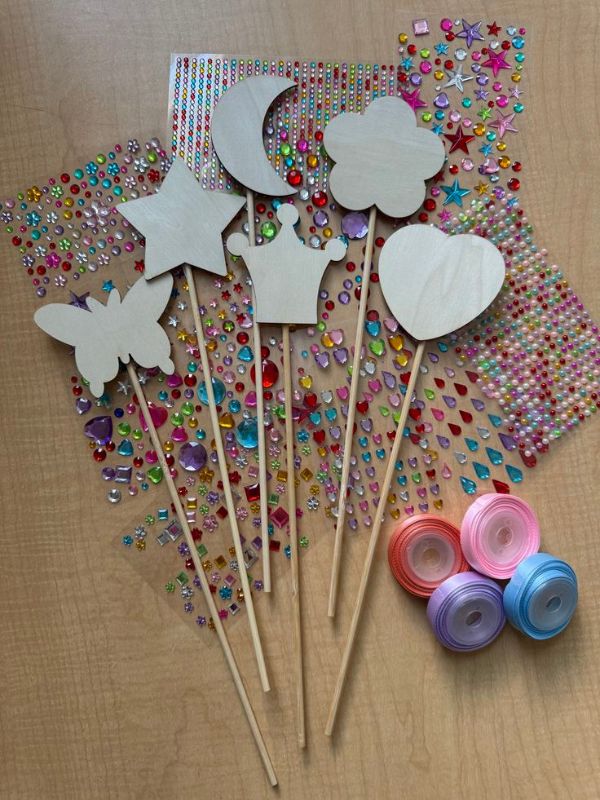
Birthday wands are perfect for princess, fairy, magical, and fantasy-themed parties. Children can decorate their own wands using ribbons, stars, glitter, and colorful paper.
They can also use the finished wands for pretend play and birthday pictures.
Materials needed
-
Wooden craft sticks or sturdy paper straws
-
Colored cardstock
-
Star-shaped paper templates
-
Ribbons
-
Glue
-
Washable markers
-
Stickers
-
Decorative foam shapes
How to make birthday party wands
-
Cut out two identical star shapes from cardstock for each child.
-
Give each child a craft stick or sturdy paper straw.
-
Allow them to decorate the star shapes using markers, stickers, and glitter.
-
Place glue on the inside of one star shape.
-
Position the craft stick between the two star shapes, with part of the stick inside.
-
Press the two star shapes together so the stick stays firmly in place.
-
Attach colourful ribbons around the bottom of the star.
-
Allow the glue to dry before the children begin playing with their wands.
Helpful tips: Prepare the star shapes before the party to make the activity easier. Use lightweight decorations so the wands remain easy for small hands to hold
6.Personalisedized Picture Frames
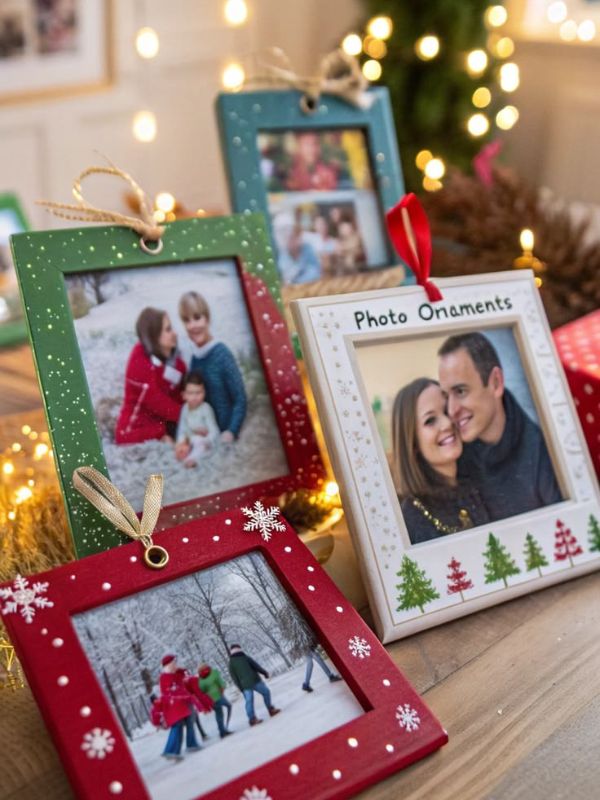
A personalized picture frame is a lovely craft that allows kids to create a special keepsake from the birthday celebration. You can take pictures of the children during the party and let them decorate frames to hold their photographs.
This activity works for almost any birthday theme and makes a thoughtful take-home gift.
Materials needed
-
Plain cardboard or ready-made craft frames
-
Colored paper
-
Glue sticks
-
Washable markers
-
Stickers
-
Buttons or decorative foam shapes
-
Ribbons
-
Printed birthday pictures
How to make personalised picture frames
-
Prepare cardboard frames before the party by cutting out a rectangular or square shape with an opening in the middle.
-
Give each child a frame to decorate.
-
Allow them to cover the frame with colored paper or paint it using washable paint.
-
Provide stickers, buttons, ribbons, and other decorations.
-
Encourage children to write their names or the birthday date on the frame.
-
Help them attach a cardboard stand at the back so the frame can stand on a table.
-
Once the decorations are dry, place a birthday photograph inside each frame.
Helpful tips: If you have many kids attending, prepare the frames in advance. You can take group or individual pictures early in the celebration and print them before the children leave.
7. DIY Paper Flower Bouquets
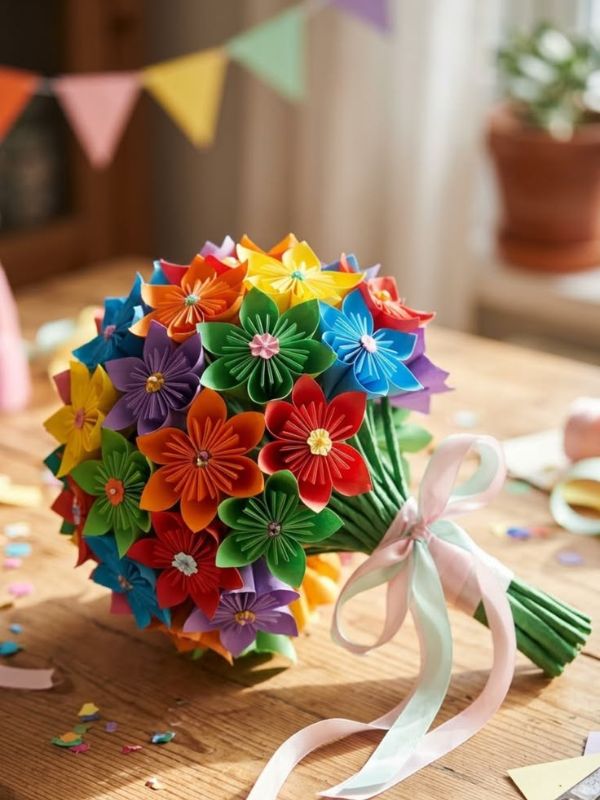
Paper flower making is a beautiful craft activity for kids who enjoy cutting, folding, and arranging colourful materials. They can create small bouquets using different flower shapes and colours.
These flowers can also serve as table decorations or handmade gifts for parents.
Materials needed
-
Colored construction paper
-
Green craft sticks or drinking straws
-
Child-safe scissors
-
Glue sticks
-
Green paper for leaves
-
Ribbons
-
Pencil
-
Small paper cups or containers
How to make paper flower bouquets
-
Draw simple flower shapes on colored paper or provide ready-made templates.
-
Allow the children to choose their favourite colours.
-
Help them cut out the flower shapes.
-
Cut small circles from another colour of paper to create the flower centres.
-
Glue the circles onto the middle of the flowers.
-
Attach each flower to a green craft stick or straw.
-
Cut small leaf shapes from green paper and glue them to the stems.
-
Arrange several flowers together to create a small bouquet.
-
Tie the stems with a ribbon or place them inside a decorated paper cup.
Helpful tips: Use simple flower templates with large petals for younger kids. Prepare the templates in different sizes so they can create bouquets with flowers of different shapes.
8. Decorate Your Own Tote Bags
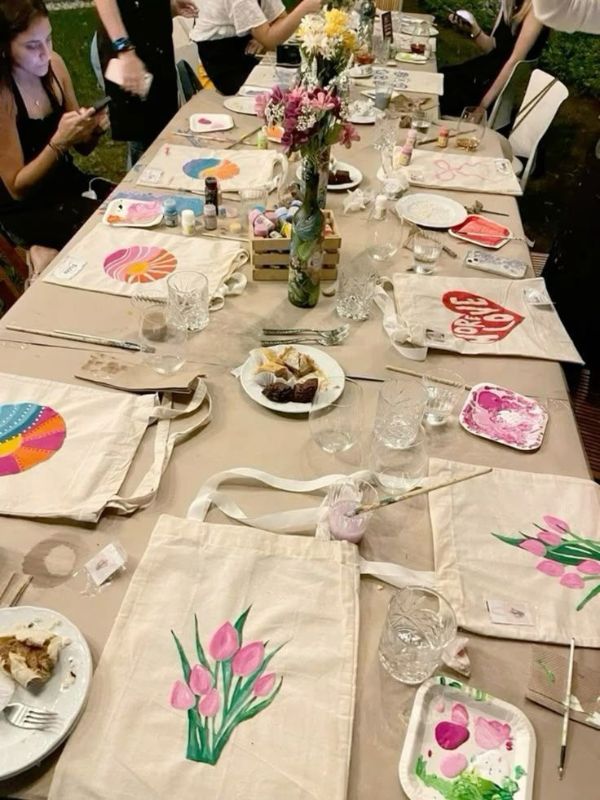
A tote bag decorating station gives kids an opportunity to design something they can actually use after the birthday party. They can decorate their bags with their names, favorite characters, flowers, hearts, stars, and other colorful patterns.
This is especially useful when you want a birthday craft that doubles as a practical party favor.
Materials needed
-
Plain cotton tote bags
-
Fabric markers
-
Fabric paint
-
Paintbrushes
-
Stencils
-
Cardboard sheets
-
Stickers suitable for fabric
How to decorate tote bags
-
Give each child a plain tote bag.
-
Place a piece of cardboard inside each bag to prevent markers or paint from transferring to the other side.
-
Provide different fabric markers, stencils, and paint colours.
-
Encourage children to write their names or draw their favourite designs.
-
They can use stencils to create flowers, stars, animals, or simple birthday patterns.
-
Allow them to add their favourite colours and decorative details.
-
Leave the bags flat until the paint dries completely.
-
Once dry, remove the cardboard and let each child take their personalised bag home.
Helpful tips: Choose washable, child-safe fabric markers and keep the designs simple. If you are using fabric paint, check the manufacturer’s drying and setting instructions before the party.
9. DIY Beaded Necklaces
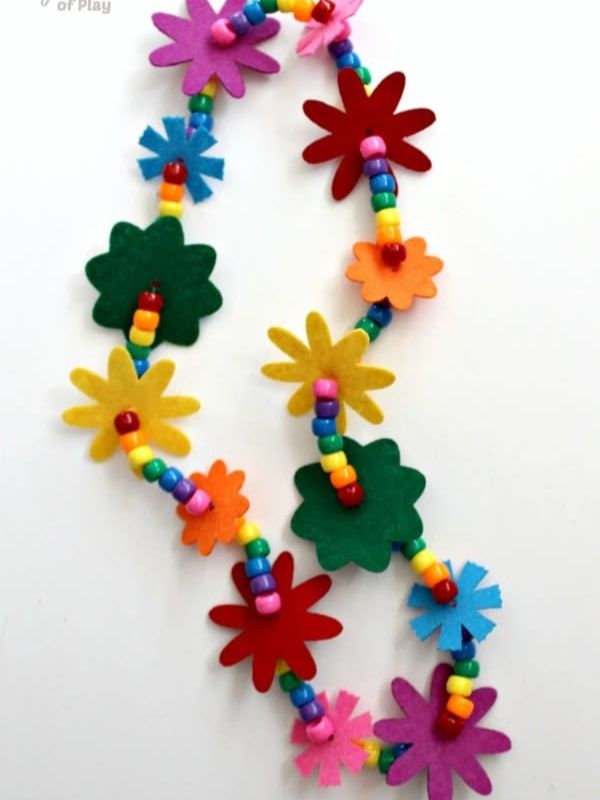
Beaded necklaces are another enjoyable jewellery-making activity for kids’ birthday parties. Children can combine different bead shapes, sizes, and colours to create accessories that match their outfits or party themes.
You can also provide letter beads so they can spell their names or favourite words.
Materials needed
-
Large colorful beads
-
Letter beads
-
Soft jewelry cord
-
Scissors
-
Small bead trays
-
Clasps if needed
How to make beaded necklaces
-
Cut jewellery cord into suitable lengths for children’s necklaces, leaving extra space for tying.
-
Arrange the beads in different colours and sizes.
-
Allow each child to select the beads they want to use.
-
Show them how to thread the beads onto the cord.
-
Encourage them to create patterns using different colours and shapes.
-
They can add letter beads to personalise their necklaces.
-
Once the necklace is complete, help secure the ends with a strong knot or suitable clasp.
-
Check that the necklace fits comfortably and does not sit too tightly around the child’s neck.
Helpful tips: Choose large beads that are easy to handle. Because necklaces can pose a strangulation risk, supervise this activity closely and avoid giving finished necklaces to very young kids.
10. Paper Butterfly Crafts
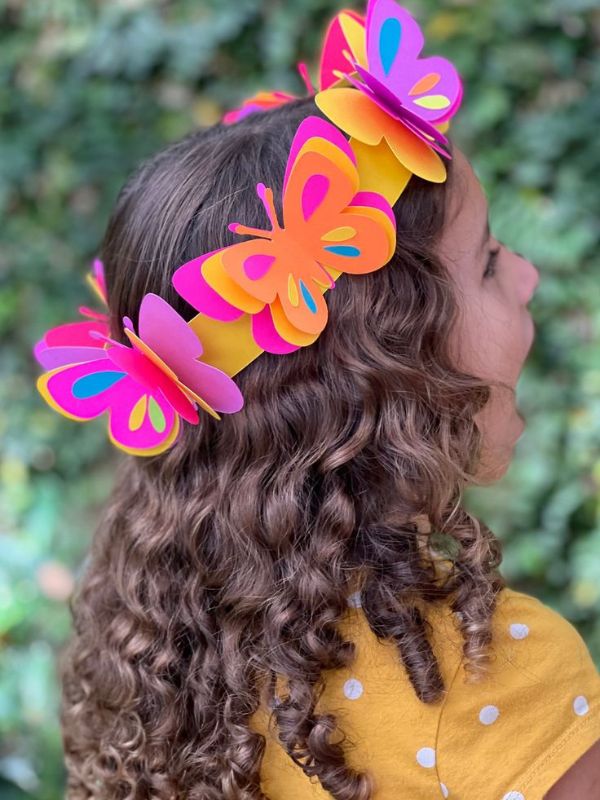
Paper butterflies are colourful and easy to make, making them a great option for garden, fairy, spring, and butterfly-themed birthday parties.
Kids can experiment with different colours and patterns to create unique butterflies. You can also display their finished creations around the party venue.
Materials needed
-
Colored construction paper
-
Child-safe scissors
-
Glue sticks
-
Markers
-
Pipe cleaners
-
Googly eyes or paper eye cutouts
-
Stickers
How to make paper butterflies
-
Fold a piece of colored paper in half.
-
Draw half a butterfly shape along the folded edge.
-
Help the child cut along the outline and unfold the paper to reveal a complete butterfly.
-
Use markers, stickers, or smaller paper shapes to decorate the wings.
-
Cut a small strip of paper to create the butterfly’s body.
-
Attach the body to the middle of the wings using glue.
-
Use a pipe cleaner or thin paper strips to create the antennae.
-
Allow the butterfly to dry before displaying or taking it home.
Helpful tips: Provide butterfly templates in different sizes. Encourage children to create symmetrical designs by decorating both wings with similar colours and patterns.
11. DIY Mini Party Hats
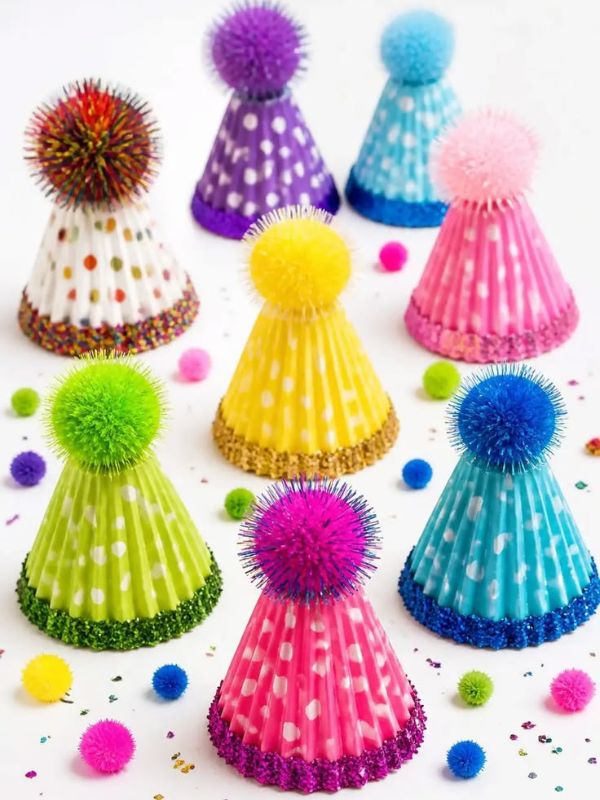
Mini party hats are a fun craft that allows children to create their own birthday accessories. Instead of giving everyone identical hats, let them choose their favourite colours and decorations.
These hats can also be worn during birthday cake cutting and group photographs.
Materials needed
-
Colored cardstock
-
Child-safe scissors
-
Glue or tape
-
Ribbons
-
Stickers
-
Pom-poms
-
Markers
-
Elastic string
How to make mini party hats
-
Cut a large semicircle from colored cardstock.
-
Roll the semicircle into a cone shape, adjusting it until the bottom opening fits comfortably.
-
Secure the overlapping edges with glue or tape.
-
Allow the children to decorate their hats with stickers, ribbons, and colourful drawings.
-
Attach a small pom-pom to the top if desired.
-
Make two small holes near the bottom edges of the hat.
-
Attach an elastic string to help keep the hat in place.
-
Check the fit before the children wear their finished hats.
Helpful tips: Prepare the semicircles before the party so children only need to roll, decorate, and assemble them. Avoid making the elastic too tight.
12. Decorate Your Own Birthday Cards
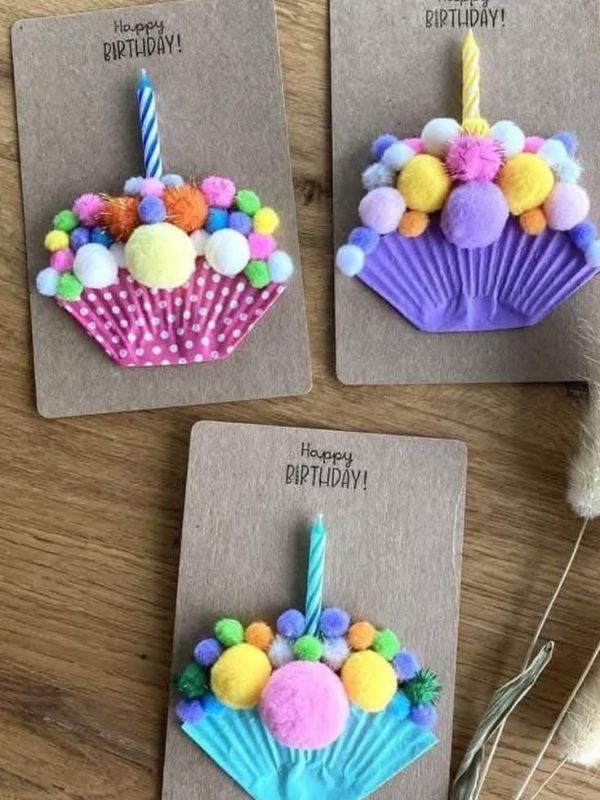
Card-making is a simple and meaningful craft activity that encourages children to express themselves through drawing and writing.
Children can make birthday cards for the celebrant, their parents, siblings, or friends. If the party has a particular theme, you can provide matching colours and decorations.
Materials needed
-
Blank cardstock
-
Colored paper
-
Crayons and markers
-
Stickers
-
Glue sticks
-
Ribbons
-
Child-safe scissors
-
Decorative stamps
How to make birthday cards
-
Fold a piece of cardstock in half to create a greeting card.
-
Give each child a blank card and allow them to choose their preferred colors.
-
Encourage them to draw birthday cakes, balloons, flowers, gifts, or other designs on the front.
-
Provide stickers and colored paper for additional decorations.
-
Help younger children write simple birthday messages.
-
Older children can write personal wishes or short messages inside their cards.
-
Allow them to sign their names and decorate the inside of the card.
-
Let the cards dry before stacking or taking them home.
Helpful tips: Provide simple birthday message examples for younger kids who may struggle with writing. You can also make this activity part of a special surprise for the birthday celebrant.
13. DIY Paper Windmills
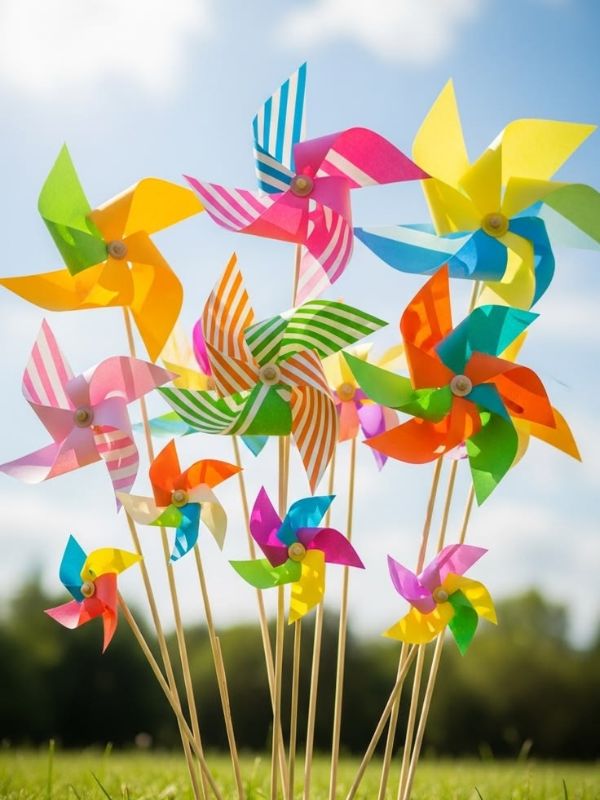
Paper windmills are colorful crafts that kids can make using simple materials. They are particularly suitable for outdoor birthday parties, garden celebrations, and summer-themed events.
Kids can choose different paper colors and patterns to make their windmills unique. Once completed, they can take them outside and watch them spin in the breeze.
Materials needed
-
Colored cardstock or lightweight craft paper
-
Child-safe scissors
-
Ruler
-
Pencils
-
Paper fasteners
-
Wooden craft sticks or sturdy straws
-
Stickers
How to make paper windmills
-
Cut a square piece of lightweight paper.
-
Use a ruler to draw diagonal lines from each corner toward the center, stopping before reaching the middle.
-
Help the children cut along each diagonal line.
-
Bring every other corner toward the center to create the windmill shape.
-
Hold the folded corners together and secure them at the center using a paper fastener.
-
Attach the paper fastener to a wooden craft stick or sturdy straw.
-
Decorate the windmill with stickers or simple drawings.
-
Test it outside to see whether it spins when the wind blows.
Helpful tips: Prepare the square papers and diagonal cutting guides in advance. Younger kids will need adult assistance with cutting and attaching the fasteners.
14. Decorate Your Own Photo Frames with Popsicle Sticks
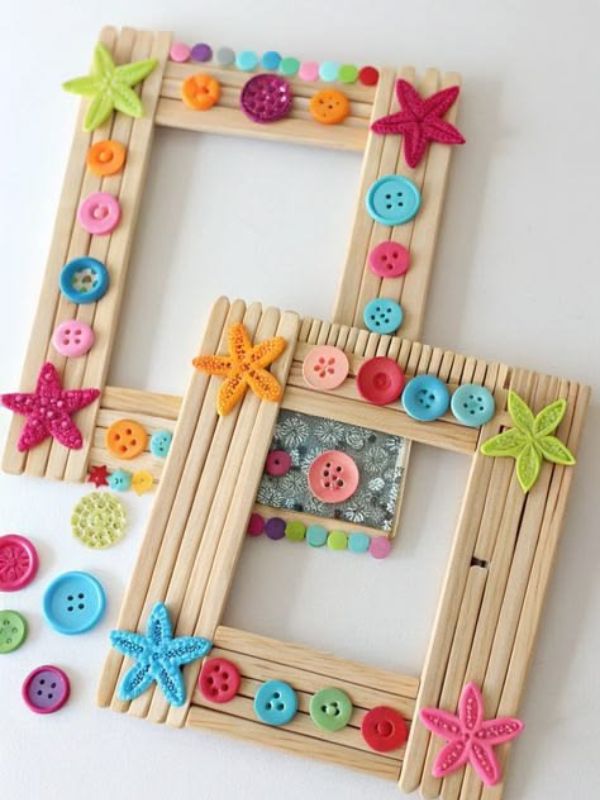
Popsicle stick photo frames are affordable and easy for kids to personalise. They can turn ordinary craft sticks into beautiful frames using paint, stickers, ribbons, and other decorations.
This activity is a good option if you want kids to create a keepsake without spending too much money.
Materials needed
-
Wooden popsicle sticks
-
Washable paint
-
Paintbrushes
-
Glue
-
Stickers
-
Decorative buttons
-
Ribbons
-
Cardboard
-
Birthday photographs
How to make popsicle stick photo frames
-
Give each child four or more popsicle sticks.
-
Arrange four sticks into a square or rectangular frame.
-
Help them glue the corners together securely.
-
Allow the children to paint the sticks using their favorite colors.
-
Once the paint dries, decorate the frame with stickers, buttons, ribbons, or small paper shapes.
-
Cut a piece of cardboard slightly smaller than the frame.
-
Attach the cardboard to the back, leaving an opening for the photograph.
-
Insert a birthday picture and add a small cardboard stand if you want the frame to stand upright.
Helpful tips: Assemble the basic frames before the party if you are working with younger children. Use non-toxic glue and allow enough drying time before inserting the pictures.
15. DIY Paper Bag Puppets
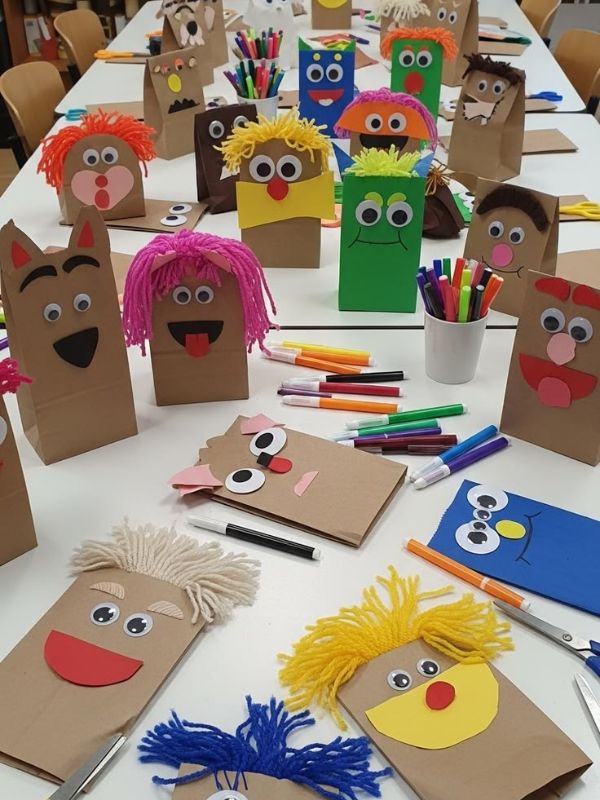
Paper bag puppets are an entertaining craft that combines creativity with imaginative play. Kids can transform ordinary paper bags into animals, funny characters, superheroes, or people by adding paper shapes and facial features.
After making their puppets, they can use them to create short stories, perform mini puppet shows, or play with their friends.
Materials needed
-
Small paper lunch bags
-
Colored construction paper
-
Glue sticks
-
Washable markers
-
Child-safe scissors
-
Googly eyes or paper eye cutouts
-
Yarn
-
Stickers
-
Cotton balls
How to make paper bag puppets
-
Give each child a paper bag and place it flat on the table with the folded bottom flap facing upward.
-
Ask them to choose the character they want to create.
-
Cut out ears, eyes, noses, mouths, and other features from colored construction paper.
-
Glue the facial features onto the folded bottom flap to create the puppet’s face.
-
Add hair using yarn or strips of colored paper.
-
Decorate the body of the paper bag with markers, stickers, and other craft materials.
-
Allow the glue to dry before placing a hand inside the bag.
-
Show the children how to move the folded flap with their fingers to make the puppet talk.
-
Encourage them to introduce their characters and perform a short puppet show.
Helpful tips: Prepare different character templates to make the activity easier for younger children. You can also organise a small puppet show after everyone finishes decorating.
How to Choose the Best Birthday Crafts and Activities for Kids
Choosing the best birthday crafts and activities for children involves more than picking games that look exciting. You need to consider the children’s ages, interests, number of guests, available space, and party budget. The right activities will keep children entertained, encourage creativity, and make the celebration enjoyable for everyone.
If you are organising a small birthday party at home or a larger celebration at an event venue, these tips will help you select activities that suit your guests and make planning easier.
1. Consider the Children’s Age Groups
Age is one of the most important factors when choosing birthday party crafts and activities. Children at different developmental stages have different interests, abilities, and attention spans.
For toddlers, choose simple activities such as colouring, finger painting with washable paints, large-block building, and simple music games. These activities require little instruction and allow younger children to explore safely.
For preschoolers, consider paper plate crafts, cupcake decorating, simple treasure hunts, and musical freeze dance. These activities encourage creativity while helping children develop basic coordination and social skills.
Older children may enjoy more challenging activities such as bracelet making, slime making, painting, paper airplane competitions, and puzzle-based treasure hunts.
Always choose activities that children can complete with little frustration. When an activity is too difficult, some guests may lose interest or need constant adult assistance.
2. Choose Activities Based on Their Interests
Children are more likely to participate when the activities match their interests. Before choosing your crafts and games, think about what the birthday child and their friends enjoy doing.
For example, children who love drawing and painting may enjoy a creative art station. Those who enjoy music and dancing may prefer musical freeze dance or a dance competition. Children who love adventures may have more fun with treasure hunts and exciting challenges.
You can also use the birthday party theme to guide your choices. A princess-themed party may include crown making and bracelet decorating, while a jungle-themed celebration could feature animal masks and animal movement games.
Choosing activities around children’s interests makes the party feel more exciting and gives guests something they genuinely want to participate in.
3. Mix Creative Crafts With Active Games
A good birthday party should offer different types of entertainment. Avoid planning only crafts or only physical games. Instead, combine creative activities with games that allow children to move around.
For example, you can begin with a colouring station or DIY birthday crown activity. Later, organise musical freeze dance, a treasure hunt, or a paper airplane competition.
This combination helps maintain children’s interest throughout the celebration. It also gives quieter children opportunities to participate in calm activities while more energetic guests enjoy active games.
Try alternating between activities that require sitting and those that involve movement. This creates a balanced party schedule and prevents children from becoming bored.
4. Consider Your Party Budget
Your birthday activities do not have to be expensive to be enjoyable. Many creative crafts and games require simple materials that you may already have at home.
For example, you can use old cardboard, coloured paper, crayons, paper plates, and ribbons for different craft projects. Traditional games such as musical freeze dance, treasure hunts, and pin the tail on the donkey also require very little spending.
Before buying supplies, make a list of the activities you want to organise and identify the materials each one requires. Look for items that you can reuse across multiple activities.
For instance, crayons and markers can be used for colouring, birthday card making, party bag decorating, and paper airplane designs.
Setting a budget early helps you avoid unnecessary purchases while ensuring that every child has enough materials to participate.
5. Choose Activities That Match Your Party Theme
Your birthday party crafts and activities should complement the overall celebration. Choosing activities that match the theme creates a more organised and memorable experience.
For a superhero birthday party, children can make superhero masks, decorate capes, and participate in simple obstacle challenges.
For a princess-themed celebration, consider DIY crowns, friendship bracelets, princess colouring sheets, and cupcake decorating.
A dinosaur-themed party could include dinosaur mask making, dinosaur colouring activities, and a dinosaur treasure hunt.
You do not need to make every activity match the theme perfectly. A few themed crafts and games are enough to create a consistent experience without making preparation complicated.
6. Think About the Number of Children Attending
The number of guests can influence which activities will work best. An activity that is easy to organise for five children may become difficult when you have twenty or more guests.
For a small birthday party, you can organise activities where every child participates individually, such as painting, card making, and bracelet decorating.
For larger celebrations, consider group activities such as treasure hunts, dance games, and team competitions. These activities allow several children to participate at the same time.
If you are planning individual crafts, prepare enough materials for everyone and consider setting up multiple stations to prevent long waiting times.
The goal is to make sure every child gets an opportunity to participate rather than spending most of the party waiting for their turn.
7. Consider the Available Party Space
Your available space should also influence your choice of birthday activities. Some crafts require tables and chairs, while active games need enough room for children to move around.
If you are hosting the party in a small living room, choose activities such as colouring, cupcake decorating, birthday card making, and simple board games.
For outdoor celebrations, you have more room for treasure hunts, dancing competitions, paper airplane games, and other movement-based activities.
Also, consider where children will sit, where craft materials will be placed, and how guests will move between activities.
Choosing activities that suit your venue helps you avoid overcrowding and makes the party easier to manage.
8. Prioritise Simple and Safe Activities
The best birthday party activities should be enjoyable without creating unnecessary difficulties for children or parents.
Choose crafts with simple instructions and materials that are suitable for the children’s ages. For younger guests, avoid small beads, sharp tools, and decorations that could create choking hazards.
Use washable paints, child-safe glue, blunt-ended scissors where appropriate, and non-toxic craft supplies.
For activities involving food, check for allergies and provide adult supervision. Also, ensure that games take place in a safe area without sharp objects, slippery floors, or obstacles.
Simple activities are often easier to organise and allow children to focus on having fun rather than struggling to understand complicated instructions.
Essential Materials to Prepare for a Kids’ Birthday Craft Party
Preparing the right supplies is an important part of organising successful birthday party crafts and activities for children. Having all the materials ready before guests arrive makes it easier for children to participate, explore their creativity, and enjoy each activity without unnecessary interruptions.
You do not need to spend a lot of money buying expensive craft materials. Many birthday party activities use simple supplies that are affordable, easy to find, and reusable for different projects.
Here are the essential supplies to prepare for your children’s birthday party.
1. Paper, Cardboard, and Colouring Materials
Paper and cardboard are some of the most useful supplies for children’s birthday crafts. They can be used for making birthday cards, paper crowns, animal masks, party decorations, and paper airplanes.
Prepare different types of paper, including coloured construction paper, plain drawing sheets, cardboard, and patterned craft paper. Having different colours and textures gives children more options when creating their projects.
You can also provide colouring books, printed activity sheets, and simple craft templates to make activities easier for younger guests.
Helpful tip: Buy paper in different colours and keep some extra sheets available. Children often need additional materials when they want to change or improve their designs.
2. Paints, Brushes, and Crayons
Painting and colouring activities give children the opportunity to express their creativity. These supplies are useful for picture painting, paper plate crafts, photo frame decorating, and birthday card making.
Prepare washable, non-toxic paints in different colours, paintbrushes of various sizes, crayons, coloured pencils, and washable markers.
Provide small containers for paint and water, along with paper towels for cleaning brushes and wiping spills.
For younger children, choose large crayons that are easy to hold. You can also provide colouring sheets with simple pictures to help children who may not know what to draw.
Helpful tip: Use washable paints and cover the activity tables with old newspapers or protective sheets to make cleaning easier after the party.
3. Glue, Scissors, and Decorative Items
Basic craft tools help children assemble and personalise their projects. They are particularly useful for making crowns, animal masks, greeting cards, and decorated party bags.
Some essential supplies include:
1. Child-safe glue sticks.
2. Blunt-ended craft scissors.
3. Washi tape and colourful adhesive tape.
4. Stickers and decorative shapes.
5. Ribbons and bows.
6. Large decorative paper pieces.
You can also provide pre-cut shapes for younger children who may struggle with cutting paper.
Keep sharp scissors and other potentially dangerous tools away from children. Adults should assist whenever a project requires cutting or more complicated assembly.
4. Beads, Ribbons, and Craft Accessories
If you plan to include jewellery-making activities, prepare colourful beads, elastic cords, ribbons, and other suitable accessories.
These materials are useful for making friendship bracelets, necklaces, hair accessories, and decorative items. Choose different colours, shapes, and patterns to give children more creative freedom.
You can organise the supplies in small containers and allow older children to select their preferred combinations.
For younger children, use larger craft materials that are appropriate for their age and provide adult supervision. Avoid small beads and accessories that could pose choking risks.
Helpful tip: Purchase craft accessories in sets or bulk packs if you are expecting many guests. This can help reduce costs and ensure everyone has enough materials.
5. Game Supplies and Prizes
Apart from craft materials, you will need a few supplies for organising exciting birthday party games.
Depending on your chosen activities, prepare items such as:
1. Balloons for simple party games.
2. Music speakers for freeze dance.
3. Blindfolds for guessing games.
4. Posters and paper cut-outs for pin the tail on the donkey.
5. Small boxes for treasure hunts.
6. Paper and markers for team challenges.
7. Small prizes for game winners.
You can use inexpensive items such as stickers, pencils, colouring books, and small toys as rewards.
Prepare the game materials before the party begins so you do not have to interrupt the celebration to search for missing supplies.
6. Tables, Chairs, and Protective Covers
A comfortable activity area makes it easier for children to participate in crafts and creative projects.
Arrange enough tables and chairs for the number of children attending. The tables should provide enough space for each child to work without disturbing others.
Use washable tablecloths, old newspapers, or disposable protective covers to protect surfaces from paint, glue, food, and other craft materials.
You may also need small storage baskets or trays to organise supplies and make them easy to access.
For outdoor parties, choose a shaded area where children can comfortably sit and complete their projects.
7. Cleaning and Storage Supplies
Craft activities can create mess, especially when children are using paints, glue, glitter, and food decorations. Preparing cleaning materials helps you maintain an organised party space.
Some useful supplies include:
1. Wet wipes and paper towels.
2. Handwashing soap and clean water.
3. Small rubbish bags.
4. Aprons or old shirts.
5. Storage containers for leftover materials.
6. Labels for organising finished crafts.
Provide a place where children can wash their hands after each activity. You can also use labelled containers to collect their completed crafts and keep them safe until the party ends.
Helpful tip: Keep cleaning supplies close to the activity stations so you can quickly manage spills and maintain a tidy space.
8. Food Decorating Supplies
If you plan to include activities such as cupcake decorating or biscuit decorating, prepare the necessary food supplies ahead of time.
Depending on your chosen activity, you may need:
1. Plain cupcakes or biscuits.
2. Different colours of frosting.
3. Edible sprinkles.
4. Chocolate chips.
5. Small bowls and spoons.
6. Child-sized decorating tools.
7. Disposable plates and napkins.
Arrange the ingredients in separate containers and give each child enough space to decorate their treats.
Check for food allergies before selecting ingredients and provide adult supervision throughout the activity.
Final Preparation Tip
Before the birthday party, create a checklist of all the supplies needed for each activity. Count the number of expected guests and prepare enough materials for everyone, including a few extras.
Organise similar supplies together in labelled containers so you can easily distribute them when each activity begins. Good preparation saves time, reduces stress, and helps children enjoy a smooth and memorable birthday celebration.
How to Choose the Best Birthday Party Crafts and Activities for Different Age Groups
Setting up a birthday party craft and activity station is a great way to keep children entertained while giving them space to explore their creativity. Instead of having all the activities happen in one place, you can create organised stations where children can participate in different crafts, games, and hands-on projects.
A well-arranged activity station also makes it easier for parents and party helpers to distribute materials, guide children, and manage the celebration. You do not need a large venue or expensive decorations. A few tables, chairs, craft supplies, and thoughtful arrangements are enough to create an enjoyable activity area.
Here are practical steps to help you set up a fun and organised birthday party craft and activity station.
1. Create Separate Spaces for Different Activities
Start by deciding how many activity stations you need and where to place them. If you have enough space, create separate areas for different types of activities.
For example, you can have a creative craft station for painting, colouring, and card making. Another table can be used for bracelet making, cupcake decorating, or other hands-on projects. You can also create an open space for active games such as musical freeze dance and treasure hunts.
Separating activities helps prevent overcrowding and makes it easier for children to move from one activity to another.
If your party venue is small, you can use one large table and change the materials as children move between activities.
2. Arrange Craft Materials Before Guests Arrive
Prepare all the materials needed for each activity before the birthday party begins. This prevents unnecessary delays and allows children to start creating as soon as they arrive.
Place related supplies together in labelled containers or baskets. For example, keep crayons, markers, drawing sheets, and colouring books at the colouring station. Arrange beads, elastic cords, and decorative accessories together at the jewellery-making station.
You should also prepare enough materials for the expected number of children. Having extra supplies is helpful in case more guests arrive or some children need additional materials.
Avoid placing everything in one large container because children may struggle to find what they need.
3. Prepare Sample Crafts for Inspiration
Some children may not know what to create when they first arrive at a craft station. Preparing a few sample projects can give them ideas and help them understand what they are expected to make.
For example, you can display a decorated birthday crown, a finished friendship bracelet, a colourful greeting card, or a painted picture.
The samples do not need to be complicated. Simple designs are often more helpful because children can easily recreate them or use them as inspiration for their own projects.
Encourage children to experiment with different colours and designs rather than expecting everyone to produce identical results.
4. Provide Enough Supplies for Every Child
Nothing interrupts a fun craft activity faster than children having to wait for materials. Before the party begins, estimate how many children will participate and prepare enough supplies for everyone.
If you are organising a cupcake decorating station for 15 children, for example, prepare at least 15 cupcakes and enough frosting and toppings for each guest.
For activities involving shared equipment, such as paintbrushes and scissors, provide several sets to reduce waiting times.
You can also divide children into small groups and allow them to rotate between stations. This approach works particularly well for larger birthday celebrations.
5. Keep the Activity Area Clean and Organised
Children can create a lot of mess when working with paints, glue, food decorations, and other craft materials. Keeping the activity area organised makes the experience more enjoyable and easier to manage.
Cover tables with protective sheets or washable tablecloths. Place rubbish bins nearby and provide paper towels, wet wipes, and handwashing supplies.
Use separate containers for clean materials, used tools, and completed crafts. Encourage children to return supplies after using them and dispose of rubbish properly.
You can also provide aprons or old shirts for activities involving paint and other messy materials.
6. Make the Stations Attractive and Child-Friendly
Your activity stations should look inviting and encourage children to participate. You can decorate the tables using colourful tablecloths, birthday-themed signs, balloons, and simple centrepieces.
Use clear labels to identify each station. For example, you can write “Create Your Own Crown,” “Cupcake Decorating,” or “Colouring Corner.”
Arrange materials at a height that children can comfortably reach. Keep frequently used items within easy access and place delicate or potentially dangerous supplies where adults can supervise them.
The decorations should add to the birthday atmosphere without taking up too much working space.
7. Assign Adults or Helpers to Each Station
Having someone supervise the activity stations helps children understand instructions and complete their projects. This is especially important when younger children are attending.
Ask a few adults or responsible helpers to assist with distributing materials, explaining craft instructions, managing turns, and cleaning up.
For example, one helper can supervise cupcake decorating while another assists children with painting and paper crafts.
If you have a small number of guests, one or two helpers may be enough to oversee the activities. Make sure someone is also available to supervise children during active games.
8. Plan a Simple Activity Rotation Schedule
When you have several craft stations, create a simple schedule that allows children to enjoy different activities without feeling rushed.
For example, you can begin with a colouring or card-making activity while guests arrive. Afterward, move to cupcake decorating or bracelet making. Later, organise active games such as treasure hunts and musical freeze dance.
Give children enough time to complete each craft before moving to another activity. Some projects require more time than others, so adjust the schedule based on their age groups and the complexity of the activities.
You can also allow children to return to their favourite stations if time permits.
9. Create a Space for Finished Crafts
Children often enjoy taking their handmade projects home, so provide a designated area where they can keep their completed crafts.
Use labelled trays, baskets, or small paper bags to store their creations. Write each child’s name on their items to prevent confusion, especially when several children are making similar projects.
You can also create a small display table where children can show their finished artwork, decorated photo frames, crowns, or bracelets.
At the end of the celebration, allow each child to collect their creations as a personalised birthday party souvenir.
Final Tip
The secret to setting up a successful birthday party craft and activity station is good organisation. Prepare your materials early, create enough space for children to work comfortably, and make sure every activity has simple instructions.
Most importantly, allow children to enjoy the creative process without putting pressure on them to make perfect crafts. The goal is to help them have fun, express themselves, and create happy memories with their friends.
Tips for Keeping Kids Engaged During Birthday Party Crafts and Activities
Organising birthday party activities for children can be exciting, but it also requires proper planning to keep everything running smoothly. From preparing craft materials to managing games and keeping children entertained, a little organisation can make a big difference.
The goal is to create an enjoyable celebration where children can participate, make new memories, and have fun without parents feeling overwhelmed.
If you are hosting a small birthday party at home or a large celebration, these practical tips will help you organise activities that are entertaining, manageable, and suitable for your guests.
1. Plan Activities According to the Party Schedule
Create a simple schedule that shows when each craft or game will take place. This helps you organise the celebration and prevents activities from overlapping or taking too much time.
For example, you can begin with colouring or birthday card making while guests arrive. Once everyone has settled in, introduce group games such as musical freeze dance or treasure hunts. You can then schedule cupcake decorating before the birthday cake ceremony.
Allow enough time for children to complete each activity without rushing. Remember to include breaks for eating, drinking, and resting.
A flexible schedule is better than a strict timetable because some activities may take longer than expected.
2. Keep Instructions Simple and Easy to Follow
Children enjoy activities more when they understand what to do. Avoid complicated instructions that require too many steps or constant adult assistance.
Before starting an activity, demonstrate how it works and explain the basic rules in simple language.
For example, when organising a paper airplane competition, show children how to fold their paper and explain where they should stand when throwing their airplanes.
For craft activities, prepare simple examples that children can follow. You can also provide picture instructions for younger guests who may struggle with written directions.
Clear instructions help children participate confidently and reduce confusion during the celebration.
3. Allow Children to Explore Their Creativity
One of the best things about birthday party crafts is that children can express themselves through colours, designs, and different materials.
Avoid expecting every child to create something that looks exactly like your sample. Instead, give them the freedom to experiment and make their own choices.
For example, during a birthday crown-making activity, allow children to choose their favourite colours, stickers, and decorations. Some may prefer simple designs, while others may want colourful and detailed creations.
Celebrate their efforts and encourage them to enjoy the process rather than focusing only on the finished result.
This makes creative activities more enjoyable and helps children develop confidence in their ideas.
4. Prepare Extra Materials for Unexpected Needs
Always prepare more supplies than you think you will need. Some children may use extra paper, paint, glue, or decorative materials while completing their projects.
You may also receive unexpected guests or have materials damaged during the activities.
For example, if you are expecting 10 children for a card-making station, prepare enough paper, stickers, and crayons for at least a few additional participants.
Keep extra supplies in a separate container so you can quickly replace anything that runs out.
This small preparation step can save time and prevent unnecessary interruptions.
5. Have Helpers Available for Younger Children
Younger children often need assistance with activities that involve cutting, gluing, painting, or assembling craft materials.
Ask trusted adults or responsible helpers to supervise different activity stations. They can explain instructions, distribute materials, help children complete projects, and manage clean-up.
For example, one helper can assist with cupcake decorating while another supervises painting and colouring.
Having enough supervision also makes it easier to manage group games and ensure that every child gets an opportunity to participate.
6. Choose a Mix of Indoor and Outdoor Activities
Depending on your party venue, consider preparing different activities that can work indoors and outdoors.
Indoor activities such as colouring, bracelet making, birthday card decorating, and cupcake decorating are suitable for smaller spaces.
Outdoor activities such as treasure hunts, dancing competitions, and paper airplane games give children more room to move around.
Having alternatives is also helpful if weather conditions change during an outdoor celebration.
Choose activities that match your available space and avoid overcrowding the venue.
7. Avoid Overloading the Party Schedule
It is tempting to plan as many activities as possible because you want every child to remain entertained. However, too many activities can make the celebration tiring and difficult to manage.
Choose a reasonable number of crafts and games based on the party duration. Allow children enough time to enjoy each activity instead of rushing from one station to another.
For example, a small birthday party may only need two or three craft activities and a few group games.
You should also leave room for important moments such as eating, opening presents, taking pictures, and cutting the birthday cake.
A relaxed schedule gives children time to enjoy themselves naturally.
8. Prepare Small Prizes and Participation Rewards
Small rewards can make birthday party games more exciting and encourage children to participate.
You do not need expensive gifts. Simple items such as stickers, pencils, colouring books, bubbles, and small toys can make lovely prizes.
You can reward children for winning a game, showing creativity, helping their teammates, or participating enthusiastically.
Avoid making every activity highly competitive. Give children opportunities to receive appreciation for different efforts so that everyone feels included.
The main purpose is to create happy memories, not to make children feel pressured to win.
9. Have Backup Activities Ready
Sometimes children may lose interest in a planned game, finish a craft earlier than expected, or arrive at different times.
Preparing a few simple backup activities can help you manage these situations without disrupting the party.
Keep options such as colouring sheets, simple puzzles, storytelling, guessing games, and musical activities available.
These activities require little preparation and can keep children entertained while you organise the next part of the celebration.
Having alternatives also helps if a particular activity does not work as expected.
10. Focus on Fun Rather Than Perfection
Remember that the purpose of birthday party activities is to help children enjoy themselves. Not every craft needs to look perfect, and not every game needs to follow a strict structure.
Some children may prefer painting quietly, while others may enjoy dancing or participating in group challenges. Give them room to choose activities that interest them.
Be flexible when things do not go exactly as planned. If children enjoy a particular game, allow them a little more time to play. If an activity becomes too difficult, simplify it or move to another option.
When you focus on creating an enjoyable experience rather than making everything perfect, organising a children’s birthday party becomes much easier and more rewarding.
Budget-Friendly Birthday Party Crafts and Activities for Kids
Organising an exciting birthday party for children does not mean you have to spend a lot of money. You can plan enjoyable craft activities using affordable materials, everyday household items and simple DIY projects.
The secret is to focus on activities that encourage creativity and keep children entertained without requiring expensive supplies. Many materials, such as cardboard, old newspapers, empty containers and coloured paper, can be reused to create interesting crafts.
If you are planning a birthday party on a tight budget, here are some affordable crafts and activities to consider.
1. Use Recycled Materials for DIY Crafts
One of the easiest ways to save money on birthday party crafts is to reuse materials you already have at home. Instead of buying everything new, collect clean recyclable items and turn them into creative projects.
Some materials you can use include:
1. Empty cardboard boxes
2. Toilet paper rolls
3. Old newspapers
4. Plastic bottles
5. Egg cartons
6. Used greeting cards
7. Clean bottle caps
For example, children can use toilet paper rolls to make binoculars, cardboard boxes to create toy houses or egg cartons to make colourful caterpillars.
How to organise it: Collect and clean the materials before the party. Cut cardboard into suitable shapes and arrange the items on a craft table. Provide glue, crayons, markers and child-safe scissors so children can transform the recycled materials into their own creations.
2. Choose Paper-Based Craft Activities
Paper crafts are among the most affordable activities for children’s birthday parties because they require only a few basic supplies. A pack of coloured paper can be used for several different projects.
You can organise activities such as:
1. Paper flower making
2. Birthday crown decorating
3. Greeting card making
4 Paper animal masks
5. Paper windmill making
6. Paper chains
How to organise it: Purchase coloured paper, glue sticks, crayons and child-safe scissors. Prepare simple examples of what children can create and allow them to choose their favourite projects.
To save more money, use plain white paper and let children colour their own designs.
3. Organise a DIY Colouring Station
A colouring station is an inexpensive way to entertain children, particularly toddlers and preschoolers. It requires very little preparation and allows children to express their creativity at their own pace.
You only need:
1. Plain drawing sheets
2. Printed colouring pages
3. Crayons
4. Coloured pencils
5. Washable markers
How to organise it: Print or draw simple pictures of animals, birthday cakes, cartoons, flowers and other child-friendly designs. Arrange the sheets on a table with colouring materials.
Allow each child to choose a picture and colour it however they like. They can take their finished artwork home as a birthday souvenir.
4. Plan a Musical Chairs Game
You do not need expensive toys or special equipment to organise an entertaining birthday activity. Musical chairs is a classic children’s party game that requires only chairs and music.
How to organise it:
1. Arrange chairs in a circle, using one fewer chair than the number of participating children.
2. Play lively children’s music.
3. Ask the children to walk around the chairs while the music plays.
4. Stop the music unexpectedly.
5. Each child should quickly find a chair.
6. The child without a chair leaves the round.
7. Remove one chair and continue until one winner remains.
Budget-saving tip: Use a phone or speaker to play music instead of hiring a DJ for the activity. You can also organise a non-elimination version so younger children do not feel disappointed when they miss a chair.
5. Create a DIY Treasure Hunt
A treasure hunt is an exciting activity that encourages children to explore, solve simple clues and work together. You can organise it using items already available at home.
Materials needed:
1. Small toys or treats
2. Paper for writing clues
3. Small baskets or gift bags
4. Coloured stickers
How to organise it:
1. Select a safe area for the treasure hunt.
2. Hide small toys or treats in different locations.
3. Prepare simple clues that guide children towards the hidden items.
4. Give each child or team the first clue.
5. Allow them to search for the hidden treasures.
6. Celebrate their discoveries and make sure every child receives a small reward.
Budget-saving tip: Use affordable sweets, stickers or small stationery items as treasures. You can also use toys you already own instead of purchasing new prizes.
6. Set Up a DIY Face Painting Station
Face painting can make a children’s birthday party more exciting without requiring a professional entertainer. If you are comfortable with simple designs, you can organise a small face painting station yourself.
Popular designs include butterflies, flowers, stars, rainbows and simple animal faces.
Materials needed:
1. Skin-safe face paints
2. Face painting brushes
3. Clean water containers
4. Mirrors
5. Cotton pads
6. Wet wipes
How to organise it: Choose a few simple designs and practise them before the party. Display sample pictures so children can select what they want. Allow an adult to handle the painting and use products specifically designed for children’s skin.
Budget-saving tip: Keep the designs simple rather than attempting complicated face painting. A few colourful designs can entertain many children without requiring too many supplies.
7. Organise a Dance and Freeze Game
A dance and freeze game is a fun, low-cost activity that gets children moving and laughing. It requires no special equipment apart from music and enough space for the children to dance.
How to organise it:
1. Create an open space where children can move safely.
2. Play their favourite children’s songs.
3. Encourage everyone to dance freely.
4. Pause the music at different intervals.
5. Ask the children to freeze in whatever position they are in.
6. Anyone who moves can perform a funny dance or simply continue playing in a non-elimination version.
Budget-saving tip: Prepare a playlist of popular children’s songs before the party. This saves you from paying for additional entertainment.
8. Make Homemade Party Decorations
You can save money on birthday party decorations by allowing children to create some of the decorations themselves. This combines decorating with entertainment and gives them a sense of involvement in the celebration.
Some affordable decoration crafts include:
1. Paper balloons
2. Paper chains
3. Birthday banners
4. Cardboard birthday signs
5. Paper flowers
6. Decorative party flags
How to organise it: Provide coloured paper, cardboard, glue, markers and string. Let children decorate paper shapes and create simple banners. Display their finished work around the party area.
Budget-saving tip: Use leftover wrapping paper, old magazines and unused coloured paper to create attractive decorations without purchasing expensive party supplies.
9. Arrange a DIY Building Block Challenge
If you already have building blocks or LEGO bricks at home, use them to organise a fun birthday party challenge.
Children can compete or work together to build different structures, such as towers, houses, bridges and castles.
How to organise it:
1. Divide the children into small groups.
2. Give each group a collection of building blocks.
3. Introduce a building challenge.
4. Allow them 15 to 20 minutes to complete their structures.
5. Ask each group to present its creation.
6. Celebrate creativity and teamwork.
Budget-saving tip: Use existing building blocks instead of purchasing new sets. You can also use clean cardboard boxes and paper cups for simple construction challenges.
10. Give Simple Handmade Party Favours
You do not need expensive gift packages to make children feel special. Handmade party favours are affordable alternatives that allow children to take home something meaningful.
Some simple options include:
1. Handmade greeting cards
2. Friendship bracelets
3. Decorated paper bookmarks
4. Paper crowns
5. Personalised colouring sheets
6. Small decorated craft boxes
How to organise it: Set up a small table with affordable craft supplies. Allow each child to make one or two items and place them in a simple paper gift bag.
Budget-saving tip: Buy craft materials in larger packs and divide them among the children. This is usually more affordable than purchasing individual gifts for every guest.
11. Use Homemade Playdough for Creative Play
Homemade playdough is an affordable alternative to purchasing several commercial playdough sets. Children can use it to create shapes, animals, flowers, birthday cakes and other imaginative designs.
Materials needed:
1. 2 cups of plain flour
2. 1/2 cup of salt
3. 1 tablespoon of vegetable oil
4. About 3/4 cup of water
5. Food colouring
How to prepare it:
1. Mix the flour and salt in a large bowl.
2. Add the vegetable oil.
3. Gradually pour in the water while mixing.
4. Knead the mixture until it forms a soft dough.
5. Divide the dough into smaller portions.
6. Add different food colours to create colourful playdough.
How to organise it: Give each child a small portion of playdough and provide simple shape cutters or rolling pins. Allow them to create whatever they like.
Budget-saving tip: Prepare the playdough at home before the party and store it in airtight containers. Use clean, age-appropriate tools for shaping.
12. Organise a Simple Balloon Pop Game
Balloon games are inexpensive and can add excitement to a children’s birthday celebration. A balloon pop challenge is one option, especially for older children who can participate safely.
Materials needed:
1. Balloons
2. Small pieces of paper
3. A container for holding balloons
4. Small prizes
How to organise it:
1. Write simple activities or fun challenges on small pieces of paper.
2. Place one paper inside each balloon before inflating it.
3. Arrange the balloons in a safe activity area.
4. Allow each child to select a balloon.
5. An adult should help reveal the paper inside.
6. Let the children complete the simple challenges written on the papers.
Budget-saving tip: Use simple challenges such as singing a birthday song, dancing, naming an animal or telling a funny story.
For younger children, avoid balloon popping because loud popping sounds can frighten them. An adult should handle popped balloon pieces immediately.
13. Host a DIY Storytelling Session
Storytelling is a wonderful birthday party activity that costs almost nothing to organise. It allows children to use their imagination while listening to interesting stories and participating in group discussions.
How to organise it:
1. Arrange chairs or cushions in a comfortable circle.
2. Choose an interesting children’s story.
3. Invite an adult to read the story aloud.
4. Pause at different points and ask children what they think will happen next.
5. Allow children to suggest different endings.
6. Invite volunteers to tell their own short stories.
Budget-saving tip: Use children’s storybooks already available at home or create your own simple birthday-themed stories.
14. Arrange a DIY Photo Booth
A photo booth gives children an opportunity to take fun pictures with their friends. You can create one using simple household materials instead of renting an expensive photography setup.
Materials needed:
1. Plain coloured fabric or bedsheet
2. Cardboard
3. Markers
4. Balloons
5. Paper decorations
6. Handmade photo props
How to organise it:
1. Select a suitable corner of the party venue.
2. Hang a colourful bedsheet or fabric as the background.
3. Decorate the area with balloons and paper flowers.
4. Cut cardboard into shapes such as glasses, moustaches and speech bubbles.
5. Attach the props to suitable handles.
6. Allow children to take pictures individually or with friends.
Budget-saving tip: Use a smartphone to take the pictures. You do not need a professional camera or expensive photo booth equipment.
15. Organise a Simple Outdoor Obstacle Course
If you have an open space, an obstacle course can provide children with hours of physical entertainment. You can create different challenges using household items without spending much money.
Materials needed:
1. Plastic cones or empty containers
2. Hula hoops
3. Soft balls
4. Cardboard boxes
5. Ropes or floor markers
How to organise it:
1. Select a flat, open area.
2. Arrange the materials to create simple challenges.
3. Ask children to walk around containers, jump through hoops or throw soft balls into baskets.
4. Demonstrate each activity before the children begin.
5. Allow children to participate individually or in small groups.
6. Celebrate everyone’s participation rather than focusing only on winners.
Budget-saving tip: Use household items you already have instead of buying sports equipment. Make sure the course has no sharp edges, slippery surfaces or dangerous obstacles.
Final Tips for Saving Money on Kids’ Birthday Party Crafts and Activities
To enjoy a creative birthday celebration without overspending, keep these simple tips in mind.
1. Plan your activities before purchasing materials.
2. Choose crafts that use similar supplies.
3. Reuse clean household and recyclable materials.
4. Buy basic craft supplies in larger packs where economical.
5. Prepare some decorations at home.
6. Use free music and storytelling for entertainment.
7. Ask family members to help supervise activities.
8. Avoid buying materials for activities you may not have time to organise.
9. Choose activities that allow children to take their creations home.
The goal is not to organise the most expensive birthday party but to create an enjoyable experience where every child feels included. With a little creativity and proper planning, you can organise memorable birthday party crafts and activities while staying within your budget.
How to Set Up a Birthday Party Craft Station
Setting up a birthday party craft station is a great way to keep children entertained while allowing them to explore their creativity. Instead of giving everyone the same activity, you can create different stations where children can make crafts, decorate items and participate in hands-on activities.
A well-organised craft station also makes it easier to manage supplies, supervise children and prevent unnecessary mess. You do not need a large space or expensive decorations. A few tables, basic craft materials and proper organisation are enough to create an enjoyable experience.
Here is how to set up a birthday party craft station step by step.
1. Choose a Suitable Location
The first step is to select a comfortable and spacious area for the craft activities. Choose a location where children can move around freely without disturbing other party activities.
If you are hosting the birthday party at home, you can use the living room, backyard, dining area or an open space in the compound.
Consider the following when choosing your location.
1. Make sure the area has enough space for tables and chairs.
2. Choose a well-lit location so children can see what they are doing.
3. Avoid areas with expensive furniture or delicate decorations.
3. Keep the craft station away from food and drinks.
4. Choose a location where adults can easily supervise the children.
Helpful tip: If you are organising messy activities such as painting, slime making or cupcake decorating, an outdoor space may be more convenient because cleaning will be easier.
2. Arrange Materials Before Guests Arrive
One of the easiest ways to keep a craft station organised is to prepare all the materials before the children arrive. Avoid waiting until the activity begins before searching for scissors, glue, paper or paint.
Start by making a list of the materials required for each craft activity.
For example, if you are organising a bracelet-making station, arrange beads, elastic cords and containers on the table. For a painting station, prepare paints, brushes, water containers and protective covers.
Follow these simple steps.
1. Gather all the materials needed for each activity.
2. Sort similar items into separate containers.
3. Place frequently used supplies within children’s reach.
4. Prepare sample crafts to show children what they can make.
5. Keep extra supplies nearby in case some materials run out.
Helpful tip: Prepare individual craft kits for each child when possible. This reduces sharing difficulties and prevents children from spending too much time waiting for materials.
3. Create Separate Craft Stations
If you have enough space, create different craft stations to give children more activities to explore. Each station should focus on one particular craft so children can easily understand what they need to do.
Here are some stations you can include.
1. Painting station: Provide paper, paintbrushes, washable paints and drawing sheets.
2. Jewellery-making station: Arrange colourful beads, elastic cords and large decorative pieces.
3. Paper craft station: Provide construction paper, glue sticks, child-safe scissors and markers.
4. Decoration station: Allow children to decorate party hats, photo frames or tote bags.
5. Cupcake decorating station: Arrange plain cupcakes, frosting and edible toppings.
Label each station with a simple sign so children know what activity is available.
Helpful tip: You do not need to create too many stations. Three or four well-organised stations are enough for most small birthday parties. Choose activities based on the number and ages of the children attending.
4. Prepare Sample Crafts for Inspiration
Some children may not know what to create when they first arrive at the craft station. Providing finished examples helps them understand the activity and gives them ideas to work with.
For instance, if you are organising a paper flower-making station, display a few completed flowers in different colours and designs.
You can also prepare examples of decorated birthday crowns, friendship bracelets, photo frames and party hats.
Follow these steps.
1. Complete one or two sample crafts before the party.
2. Display them where children can easily see them.
3. Explain how the finished craft was made.
4. Encourage children to choose their own colours and designs.
5. Allow them to create something different from the examples.
Helpful tip: Do not expect every child to produce the same result. The purpose of the activity is to encourage creativity, so allow children to express themselves freely.
5. Provide Adult Supervision
Adult supervision is important when children participate in birthday craft activities. Some materials, such as scissors, beads, glue and paint, require careful handling.
Assign an adult to supervise each station, especially when younger children are involved.
The supervising adult should:
1. Explain the activity in simple language.
2. Demonstrate how to use the materials.
3. Help children who find the activity difficult.
4. Monitor the use of scissors and other craft tools.
5. Prevent children from putting craft materials in their mouths.
6. Help clean up spills and maintain order.
Helpful tip: If you have many children attending, ask a few family members or friends to help supervise. This allows each child to receive attention without making the activities difficult to manage.
6. Display the Children’s Finished Creations
Displaying finished crafts gives children a sense of achievement and makes the birthday party more memorable. It also allows them to appreciate one another’s creativity.
You can create a small display area where children place their completed projects.
For example, arrange decorated photo frames on a table, hang paper flowers on a display board or place painted stones in a decorative basket.
You can also create a special section labelled “Our Little Artists” where children can display their work.
Consider these ideas.
1. Use a decorated table to display finished crafts.
2. Attach lightweight paper creations to a display board.
3. Arrange painted items on a separate drying table.
4. Take pictures of children holding their finished projects.
5. Allow each child to explain what they created.
Helpful tip: Remember to label each creation with the child’s name. This makes it easier to identify their work when it is time to pack everything for them to take home.
7. Plan a Simple Rotation System
When several children attend the birthday party, they may all want to participate in the same activity at once. This can create overcrowding and make it difficult to manage the craft stations.
A simple rotation system helps every child enjoy the available activities without unnecessary waiting.
Here is how to organise it.
1. Divide the children into small groups.
2. Assign each group a starting craft station.
3. Allow about 15 to 20 minutes for each activity, depending on its complexity.
4. Give a gentle reminder when it is time to move to another station.
5. Allow children to finish their current projects before moving.
6. Continue until everyone has had an opportunity to participate in the activities.
Helpful tip: If the children are very young, avoid making the rotation too strict. Give them enough time to complete their crafts without feeling rushed.
8. Keep the Craft Station Clean and Organised
Craft activities can become messy, especially when children use paints, glue, glitter and other decorating materials. Keeping the station organised makes the party more enjoyable and reduces the amount of cleaning required afterwards.
Provide small waste bins, wipes, paper towels and cleaning cloths at convenient locations.
Encourage children to return unused materials to their containers after completing an activity. You can also ask them to help arrange their work areas before moving to another station.
Helpful tip: Use washable materials wherever possible and keep a separate table for completed crafts. This prevents finished projects from getting damaged by unused supplies.
A well-organised birthday party craft station gives children the freedom to create, experiment and enjoy themselves. With proper preparation, suitable activities and adult supervision, you can turn a simple birthday celebration into a memorable creative experience.
Tips for Organising Fun and Stress-Free Birthday Party Activities
Planning birthday party activities for children should be exciting, not overwhelming. With several guests to entertain, crafts to prepare, and games to organise, it is easy for parents to feel stressed if they do not have a clear plan.
The secret is to keep things simple, prepare supplies ahead of time, and choose activities that match the children’s ages and interests. You do not need expensive entertainment or complicated games to create a memorable birthday celebration.
Here are practical tips to help you organise fun and stress-free birthday party activities.
1. Plan Activities Ahead of Time
Avoid waiting until the birthday party begins before deciding what children will do. Make a list of the crafts and games you want to organise and prepare a simple schedule.
For example, you can start with colouring and drawing while guests arrive, move to cupcake decorating, and then introduce exciting group games such as musical freeze dance or treasure hunts.
Planning ahead helps you determine which materials to buy, how much time each activity needs, and how many helpers you may need.
It also prevents unnecessary confusion and gives you enough time to prepare the activity stations before guests arrive.
2. Choose Age-Appropriate Activities
Children have different abilities and interests depending on their ages. An activity that an eight-year-old enjoys may be too difficult for a toddler.
For younger children, choose simple activities such as colouring, paper plate crafts, large-block building, and music games.
Older children may enjoy bracelet making, painting, slime making, treasure hunts, and friendly competitions.
If children of different ages are attending, provide a mixture of simple and challenging activities. This ensures that everyone has something enjoyable to participate in.
3. Keep Instructions Simple and Clear
Children should understand how to participate without needing long explanations. Complicated instructions can make activities frustrating, especially for younger guests.
Before starting a craft or game, demonstrate what children need to do. For example, show them how to decorate a birthday crown or fold a simple paper airplane.
Break activities into small steps and allow children to ask questions when necessary.
You can also prepare sample crafts or picture instructions to help children follow along independently.
4. Prepare All Supplies Before the Party
Gathering materials at the last minute can make birthday party planning stressful. Prepare everything you need before the celebration begins.
Create a checklist for each activity and include items such as paper, crayons, paint, glue, stickers, beads, and game accessories.
Count the expected guests and provide enough materials for everyone. It is also helpful to keep a few extra supplies in case something gets damaged or more children participate than expected.
Arrange the materials in labelled containers so you can easily find and distribute them when needed.
5. Mix Creative Crafts With Active Games
Children enjoy different forms of entertainment, so avoid filling the entire party schedule with activities that require sitting or activities that involve constant movement.
Combine quiet crafts such as painting, colouring, and card making with energetic games such as dancing competitions, treasure hunts, and relay races.
For example, you can begin with a creative activity, introduce an active game afterward, and then allow children to relax with cupcake decorating.
This balance helps maintain their interest and gives children with different personalities opportunities to enjoy the celebration.
6. Have Enough Adults or Helpers Available
Supervision is important when organising birthday party activities, particularly when younger children are attending.
Ask family members or trusted friends to help manage different stations. One person can supervise crafts, another can assist with food decorating, while someone else manages group games.
Helpers can distribute supplies, explain instructions, assist children who need support, and keep the activity area organised.
This arrangement allows you to enjoy the celebration while ensuring that children receive the attention they need.
7. Avoid Planning Too Many Activities
Having many exciting ideas does not mean you need to include all of them in one birthday party.
Too many activities can make the schedule crowded and leave children feeling rushed. They may also lose interest if they constantly have to move from one activity to another.
Choose a few activities that suit the party duration and allow enough time for children to enjoy them.
For example, you could organise three craft activities and two group games for a small birthday celebration. You can adjust the number depending on the number of guests and the available time.
Remember to leave room for eating, taking pictures, opening presents, and cutting the birthday cake.
8. Make Activities Flexible and Inclusive
Not every child will enjoy the same activities. Some may love painting and drawing, while others may prefer dancing, building, or solving puzzles.
Provide different options and allow children to choose what interests them whenever possible.
Avoid forcing shy children to participate in activities they find uncomfortable. Instead, encourage them gently and give them opportunities to join when they feel ready.
For group games, choose activities that allow everyone to participate rather than eliminating children too early.
This helps create a welcoming environment where every guest feels included.
9. Prepare Small Prizes and Party Favours
Small rewards can make birthday games more exciting and encourage children to participate.
You can prepare inexpensive prizes such as stickers, pencils, colouring books, bubbles, small toys, and sweets.
Give rewards for different achievements, such as creativity, teamwork, participation, or winning a particular game.
You can also allow children to take their finished crafts home as souvenirs. Handmade bracelets, decorated party bags, birthday cards, and photo frames make lovely keepsakes.
Keep the rewards simple and focus more on participation than competition.
10. Have Backup Activities Ready
Sometimes an activity may finish earlier than expected, or children may lose interest in a game. Having backup options helps you handle these situations without disrupting the celebration.
Prepare simple alternatives such as storytelling, colouring sheets, guessing games, simple puzzles, and musical activities.
These options require little preparation and can keep children entertained while you organise the next activity.
You should also have alternative indoor games if you are planning an outdoor birthday party and the weather changes.
11. Keep the Activity Area Clean and Organised
A messy activity area can make it difficult for children to concentrate and for adults to manage the celebration.
Use separate containers for craft supplies, provide rubbish bins, and cover tables with protective sheets before starting messy activities.
Keep cleaning materials such as wet wipes, paper towels, and handwashing supplies nearby.
Encourage children to return materials after use and help tidy their workspaces when they finish.
A clean and organised environment makes it easier to move between activities and keeps the party space comfortable.
12. Allow Time for Breaks and Refreshments
Children need time to rest, drink water, and enjoy their food between activities. Avoid scheduling one game immediately after another without allowing breaks.
You can arrange short refreshment breaks between craft sessions and active games. This gives children time to relax before participating in the next activity.
Provide easy-to-eat snacks, water, and other suitable refreshments. Also, consider younger children’s needs when planning the schedule.
A comfortable pace helps children remain happy and interested throughout the birthday celebration.
Final Tip
The best birthday party activities are not necessarily the most expensive or complicated. Simple crafts, exciting games, and thoughtful preparation can create an unforgettable celebration.
Plan ahead, prepare your supplies, involve a few helpers, and give children enough freedom to enjoy their favourite activities. Most importantly, stay flexible and remember that the goal is to create a fun experience filled with laughter, creativity, and happy memories.
Common Mistakes to Avoid When Planning Birthday Party Crafts and Activities
Planning birthday party crafts and activities for children requires proper organisation to ensure everyone has an enjoyable experience. While choosing exciting games and creative projects is important, overlooking a few details can make the celebration stressful for both parents and children.
For example, choosing activities that are too difficult, forgetting essential supplies, or planning too many games can affect how smoothly the party runs.
To make your celebration more enjoyable, here are some common mistakes to avoid when organising birthday party crafts and activities.
1. Choosing Activities That Are Too Difficult
One common mistake is selecting crafts and games that are too complicated for the children’s ages. Some projects may require advanced skills, long instructions, or too much adult assistance.
When children struggle to complete an activity, they may become frustrated or lose interest.
Choose simple projects that match their abilities. For toddlers, consider colouring, simple paper crafts, and music games. Older children can enjoy more challenging activities such as bracelet making, painting, and treasure hunts.
If you want to introduce a complicated craft, simplify the instructions and prepare some materials in advance.
2. Planning Too Many Activities
It is easy to get carried away when choosing birthday party entertainment. You may want to include every exciting craft and game you find, but trying to fit too many activities into one celebration can create unnecessary pressure.
Children need enough time to enjoy each activity without constantly being moved to another station.
Instead of planning too many options, select a few crafts and games that suit the party duration. Leave enough time for eating, taking pictures, opening presents, and cutting the birthday cake.
A simple, well-organised schedule is often more enjoyable than a crowded one.
3. Forgetting to Prepare Materials Ahead of Time
Waiting until guests arrive before gathering craft supplies can disrupt the celebration. Children may become impatient when they have to wait for materials or when an activity cannot begin because something is missing.
Before the party, create a checklist of everything you need for each activity.
For example, if you are organising a painting station, prepare the paper, paints, brushes, water containers, and protective table covers in advance.
Arrange everything in labelled baskets or containers so you can easily access the supplies when needed.
4. Ignoring Different Age Groups
Another mistake is assuming that all children will enjoy the same activities. Younger children may struggle with complicated crafts, while older guests may find very simple activities boring.
If your guest list includes different age groups, choose activities that offer different levels of difficulty.
For example, younger children can enjoy colouring sheets and simple paper crafts, while older children can make friendship bracelets or participate in treasure hunts.
You can also organise separate activity stations to give children more suitable options.
5. Overlooking Safety and Clean-Up
Birthday crafts can involve paints, glue, scissors, beads, and other materials that require proper supervision.
Using unsuitable supplies or allowing children to participate without supervision can create unnecessary problems.
Choose non-toxic paints, child-safe glue, and age-appropriate craft tools. Avoid small beads and other choking hazards when toddlers are attending.
You should also prepare cleaning materials such as wet wipes, paper towels, rubbish bags, and handwashing supplies.
For outdoor games, check that the play area is free from sharp objects and other obstacles before children begin.
6. Not Providing Enough Supplies for Every Child
Running out of materials during an activity can cause frustration and unnecessary competition among children.
For example, if you organise a bracelet-making station but provide only a few sets of beads, some children may spend more time waiting than creating.
Always estimate the number of guests and prepare enough supplies for everyone. Keep a few extra materials available in case more children participate or some items get damaged.
For shared equipment, such as paintbrushes and scissors, provide multiple sets to reduce waiting times.
7. Choosing Activities That Do Not Match the Party Space
Some activities require large spaces, while others need tables and chairs. Choosing the wrong activities for your venue can make the celebration uncomfortable.
For example, organising running games in a small living room can create overcrowding. Similarly, setting up several craft stations in a limited outdoor area may leave children with little room to move.
Consider your available space before selecting activities.
Choose quiet crafts and tabletop games for smaller venues. If you have a large garden or outdoor space, you can include treasure hunts, dancing competitions, and other movement-based activities.
8. Making Every Activity a Competition
Friendly competitions can make birthday parties exciting, but turning every activity into a contest may discourage some children.
Not every child wants to compete, and some may feel disappointed when they do not win.
Include activities that focus on creativity, teamwork, and enjoyment rather than winning alone.
For example, during painting or card making, allow children to create their own designs without judging whose work is best.
You can also give small rewards for participation, creativity, teamwork, and effort.
9. Forgetting to Give Children Breaks
Planning activities continuously without allowing breaks can make children tired and less interested in participating.
Remember that children need time to eat, drink water, rest, and interact with their friends.
Arrange short breaks between crafts and active games. You can also schedule refreshments after energetic activities to help children relax before moving to the next part of the celebration.
A balanced schedule keeps the party enjoyable without overwhelming the guests.
10. Not Having a Backup Plan
Sometimes a planned activity may not work as expected. Children may lose interest, materials may run out, or outdoor weather conditions may change.
Relying on only one entertainment plan can make it difficult to manage unexpected situations.
Prepare a few simple alternatives, such as colouring sheets, storytelling, guessing games, puzzles, and musical activities.
These backup options require little preparation and can help keep children entertained while you organise the next activity.
Final Tip
Avoiding these common mistakes can make organising birthday party crafts and activities much easier. Focus on age-appropriate entertainment, prepare your materials early, provide enough supervision, and create a flexible schedule.
You do not have to organise a perfect party to make children happy. A few thoughtful crafts, exciting games, and enough time for everyone to participate can create a birthday celebration they will remember.
Frequently Asked Questions About Birthday Party Crafts and Activities for Kids
Planning birthday party crafts and activities for children often comes with questions about suitable games, creative projects, supplies, costs, and age groups. Whether you are organising a small celebration at home or a large birthday party, understanding these details can help you make better decisions.
Here are answers to some common questions parents ask when planning fun birthday party activities for children.
What Are the Best Craft Activities for a Children’s Birthday Party?
Some of the best craft activities include DIY birthday crowns, cupcake decorating, birthday card making, painting, friendship bracelet making, paper plate animal masks, and photo frame decorating.
These activities allow children to express their creativity while making something they can wear, use, or take home as a souvenir. Choose crafts based on the children’s ages, interests, and available materials.
How Do You Entertain Children at a Birthday Party?
You can entertain children by combining creative crafts, group games, music, and interactive activities.
Set up craft stations where children can paint, colour, decorate cupcakes, or make bracelets. You can also organise exciting games such as treasure hunts, musical freeze dance, dancing competitions, and pin the tail on the donkey.
Offering different activities helps keep children interested throughout the celebration.
What Are Some Cheap Birthday Party Activities for Kids?
Affordable birthday party activities include colouring competitions, paper airplane making, DIY birthday cards, musical freeze dance, treasure hunts, and paper plate crafts.
You can use inexpensive materials such as cardboard, old newspapers, coloured paper, crayons, and stickers.
Many traditional party games also require very little equipment, making them suitable for parents working with a limited budget.
What Crafts Can Toddlers Do at a Birthday Party?
Toddlers can enjoy simple crafts such as colouring, large paper sticker activities, finger painting with washable non-toxic paints, simple paper plate decorations, and large-piece collage activities.
Choose projects that do not require complicated instructions or advanced hand coordination. Provide larger materials that are suitable for their age and supervise them throughout the activities.
Avoid small beads, buttons, and other objects that could pose choking hazards.
How Many Activities Should You Plan for a Children’s Birthday Party?
The number of activities depends on the party duration, number of guests, and children’s ages.
For a birthday party lasting two to three hours, you can plan around three or four main activities, including a mixture of crafts and group games.
Leave enough time for eating, taking pictures, opening presents, and cutting the birthday cake. You can also prepare simple backup activities in case children finish earlier than expected.
How Do You Keep Children of Different Ages Entertained?
Choose activities that offer different levels of difficulty so younger and older children can participate comfortably.
For example, younger children can enjoy colouring and simple paper crafts, while older guests can make friendship bracelets, decorate cupcakes, or participate in treasure hunts.
You can also organise group activities such as musical freeze dance, where children of different ages can participate together.
What Materials Do You Need for Birthday Party Crafts?
Common birthday party craft supplies include coloured paper, cardboard, crayons, washable markers, paints, paintbrushes, glue sticks, stickers, ribbons, beads, and child-safe scissors.
The materials you need will depend on the crafts you choose. Prepare a checklist before shopping and organise the supplies into separate containers for easy access.
How Long Should Birthday Party Activities Last?
Most simple birthday party crafts and games can last between 10 and 30 minutes, depending on their complexity and the children’s ages.
For example, colouring and simple guessing games may take about 10 to 15 minutes, while cupcake decorating, painting, and bracelet making may require 20 to 30 minutes.
Allow children enough time to enjoy each activity without making the schedule too crowded.
How Can I Make Birthday Party Activities More Exciting?
You can make birthday activities more exciting by connecting them to the party theme, introducing friendly challenges, playing cheerful music, and offering small prizes.
For example, organise a superhero mask-making station for a superhero party or a treasure hunt for an adventure-themed celebration.
Allow children to make creative choices and participate with their friends. Small details can make ordinary activities more memorable.
What Can Children Take Home After Birthday Party Activities?
Children can take home their handmade crafts as personalised birthday party souvenirs.
Some lovely options include decorated birthday crowns, friendship bracelets, painted pictures, handmade greeting cards, decorated photo frames, and personalised party bags.
You can also add small treats, stickers, pencils, or colouring books to their party bags.
These little keepsakes help children remember the fun they had at the birthday celebration.
Conclusion
Planning fun birthday party crafts and activities for children does not have to be expensive or stressful. With simple materials, creative ideas, and proper preparation, you can organise a celebration that keeps children entertained and creates lasting memories.
From DIY birthday crowns and cupcake decorating to treasure hunts and musical freeze dance, choose activities that match the children’s ages, interests, and party theme. Remember to prepare enough supplies, provide proper supervision, and combine creative crafts with exciting games.
Most importantly, focus on making every child feel included and giving them the freedom to have fun. A few thoughtful activities can turn an ordinary birthday celebration into a truly memorable experience.
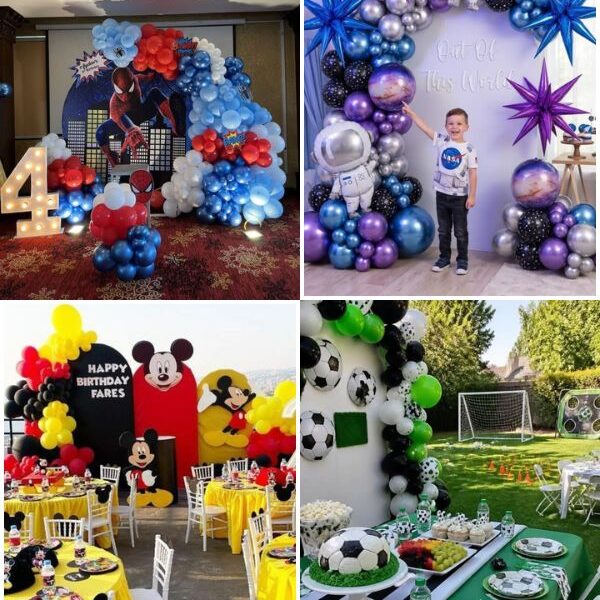
One thought on “15 Birthday Party Crafts and Activities for Kids ; Fun Activities that Kids will Love”